
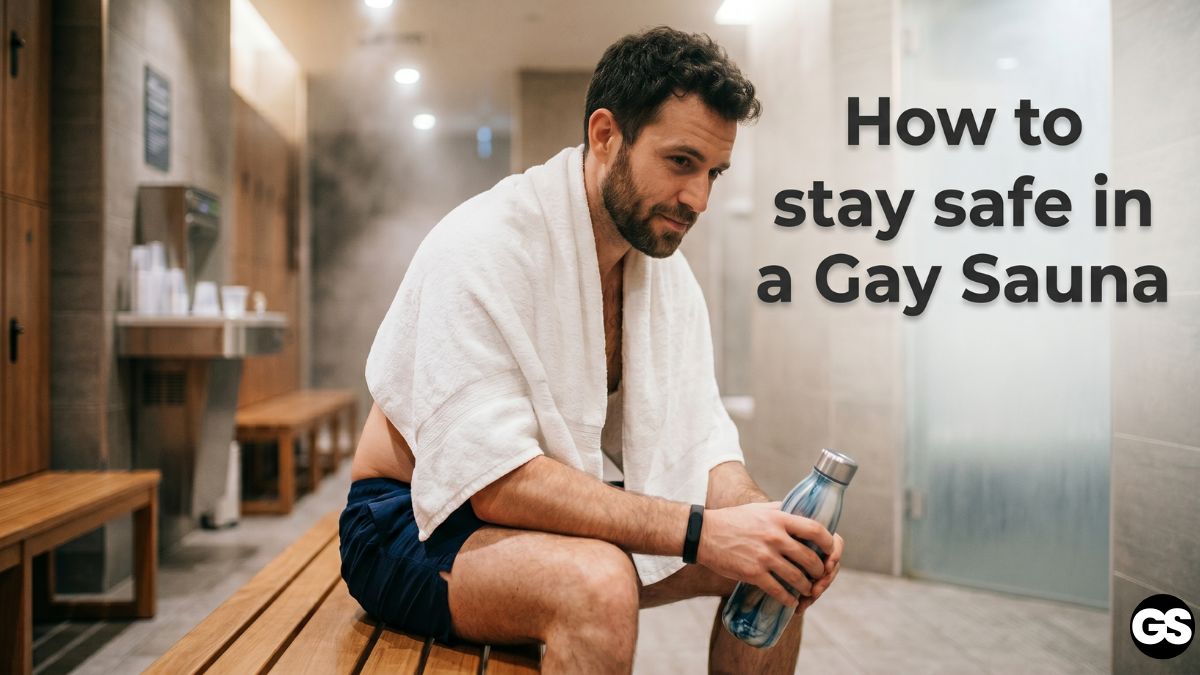
You don't need to turn up to a sauna in a state of high anxiety about whether you're going to make it out alive. The place is staffed, the wet rooms are maintained, and the people in there have been at it for years. What you actually need is the small amount of self-care that makes the whole thing pleasant rather than punishing — and that's almost entirely about hydration, lockers, and listening to yourself.
Most of "staying safe" in here comes down to the unspectacular stuff. The dramatic things a first-timer might worry about are mostly handled by being a sober adult who knows how to say no. This page is about everything else.
Hydration is the thing most people forget
The single most common reason a first visit goes sideways is dehydration. The heat catches you faster than you expect, and a sauna isn't a gym — there's no water bottle in your hand, no clock on the wall, no cue to tell you you've been in the steam room for twenty minutes.
Drink before you arrive. Drink in the lounge between rounds. Drink before you leave.
Most venues have a water cooler somewhere visible, and if not, the bar will hand you a glass without charging for it. The warning signs are the obvious ones — lightheadedness when you stand up from the bench, a head that feels packed with cotton wool, that flat, slightly nauseous feeling that creeps up before it announces itself. If any of that happens, you sit down somewhere cooler and you drink.
Don't be a hero about it.
Condoms and lube
Condoms are almost always free at the door or in baskets near the lounge. If you can't see any, ask reception — they'll point you at them or hand you some. No charge, no judgement; that's the entire point of having them in plain sight.
Lube is more variable. Some venues sell sachets at reception, some leave a pump bottle in the wet rooms, some don't really cater for it. If you're particular about brand or formulation, bring a small bottle from home — there's more on packing on the what to bring page.
PrEP is a separate conversation and not one for a sauna page. If it's relevant to you, you've already sorted it with a clinic. If it isn't yet, the time to look into it is a Tuesday afternoon at home, not at 11pm with a towel round your waist.
The locker key is the only thing you can't replace
Pay attention to the locker key. You'll be given a band, usually elastic, with a key or token attached, and you wear it on your wrist or ankle for the entire visit. It is the only piece of admin you actually have to engage with, and losing it is the only completely self-inflicted disaster on offer.
If the band feels loose, swap it before you leave reception. If the clasp is fiddly, get it sorted at the desk — staff would much rather replace a band than process a lost-key incident at the end of the night.
Never take it off in the wet areas to "keep it dry". That's exactly how keys end up on a tiled floor under a bench, found three customers later. When you leave, the band goes back at reception and that's the entire mechanism — pedestrian to the point that it's the bit first-timers occasionally come unstuck on.
Listen to your body
If something feels off, stop. Saunas are not the kind of place where pushing through a wobble pays off — you came in to enjoy yourself, and pretending you're fine when you aren't is the opposite of that.
The wet rooms in particular reward a bit of pacing. Steam rooms are hotter than they feel for the first minute or so, and the urge to "just see how long I can last" is a manufactured one. A short stretch in, a breather out, repeat as you fancy.
If something more serious shows up, staff are trained for it and would much rather know early. There's more on the rhythm of the rooms on the dos and don'ts page; the headline rule is, don't tough it out.
Staff are there for this
Staff exist so you don't have to handle problems alone. If something feels wrong — a person in a cabin who isn't getting the message, a room that smells off, a slip on a wet floor, a missing key — the answer is reception. Always reception, always early, never sit on it.
The conversation is short and unembarrassing. They've heard everything, including the thing you think is too small to mention, and they will thank you for flagging it instead of leaving them to find it on the next walkround.
Hygiene, briefly
Shower before you do anything else, shower again before you get into the jacuzzi or the pool, and shower one more time on the way out. It isn't a moral position; it's just how the place stays usable for everyone in it.
Beyond that, hygiene is mostly common sense — wash your hands, don't track shower water onto a dry lounge sofa, towel down a steam room bench before you leave it. None of it is policed, all of it is appreciated.
The whole page in one breath
Most of staying safe is unspectacular maintenance: drink water, wear the locker key, bring your own lube if you're particular, listen to your body, talk to staff if anything's off, and shower more often than you think necessary. None of it is dramatic, all of it makes the difference between a good visit and a sketchy one. After the first time, none of it will need thinking about again.
*If you want chapter and verse on PrEP, condoms, sexual health screening and clinic locations, the NHS has a properly maintained run-down online.*